Straight to the page content
Stepeva Buy now

Stepeva

Put your feet up. The wrap gets on with the rest.

One piece of neoprene, three things happening inside it. The muscle beneath the arch is worked by electrical pulses on three settings, warmth builds across the instep, and the straps hold the lot steady. Fastening and setting take about a minute. The rest is spent sitting down.

  • Three pulse settings, lowest first
  • Warmth that can be dialled down
  • A handset saves leaning forward
  • Fills from an ordinary USB-C lead
Claim the 50% saving
  • Delivery included
  • Thirty days to think it over
  • Leaves us in one working day
4.8 stars 863 reviews left by buyers
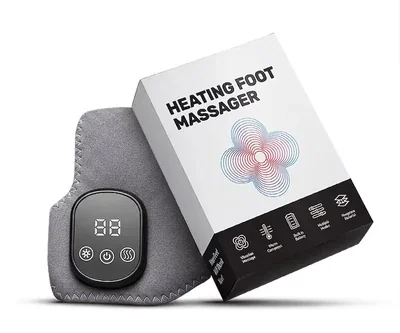
Grey neoprene Stepeva wrap photographed beside the carton it is sold in, module attached
3pulse
settings
USB-Cone common
charging lead

What a Stepeva wrap is for

Four points, before anything else, on what goes on inside the neoprene while its owner sits perfectly still.

  • Electrical pulses

    Three settings of light pulses, working the muscle with no movement asked of anybody.

  • A warmth setting

    Cold feet come round quickly, at whichever level happens to suit.

  • Pressure that holds

    Straps and neoprene keep the foot still, so nothing shifts once a session is running.

  • Fifteen to thirty minutes

    The whole commitment, beginning to end. Nothing to fill, nothing to dry, nothing to clear away.

Feet get very little thought until the end of the day. Then the shoes come off, and the whole day is accounted for in one go: the hours on a hard floor, the stairs taken twice too often, the pair that were never quite right in the first place. Tiredness of that sort arrives quietly and tends to settle in.

Long stretches in a chair produce something similar by the opposite route. The legs go unused, the feet cool down, and getting upright again is a slow business. Ward round or spreadsheet, the hallway at home tends to reveal much the same thing: feet like lead, a bit stiff, and not a scrap of appetite for a project.

Which is where good intentions come unstuck. Any remedy calls for a final push at the hour when nobody has anything left to give. A bowl of hot water means the kettle, the waiting, a wet towel and somewhere to stow the thing afterwards. Doing it by hand means folding yourself in two and leaning on one spot for a good ten minutes. Most evenings, neither of them happens.

The premise here runs the other way about: the wrap takes on the effort while its owner does nothing at all. Sit down, fasten the neoprene, choose an intensity and a warmth setting, and nothing further is asked of anybody until the session ends. Three things happen at once. Electrical pulses set the muscle beneath the arch contracting in rhythm, the heating element brings the foot up to a steady warmth, and the straps keep every part of it exactly where it should be. A bowl of water offers heat and nothing else. Rubbing by hand costs you a sore back. Here the only requirement is a chair.

Who ends up using one?

This is a comfort device for the home, and it earns its keep on the heavier days. Certain households get through rather more sessions than others.

  • Trades spent upright. Nurses on a twelve-hour shift, chefs, hairdressers, warehouse pickers, teachers pacing a classroom. The working day offers no chance to sit; the session hands it back afterwards, with nobody bending down towards their own feet.
  • The long-distance walkers. A school run at either end of the day, a dog that wants two hours of it, a commute with three flights of stairs at either end. Nobody adds those up, and yet the feet keep an accurate record.
  • Desks and home offices. Six hours in one chair leaves feet cold and stiffer than they ought to be. A quarter of an hour of warmth and pulses puts the muscle back into service without anybody having to stand up.
  • After the gym, or a long stint on the bike. Kit in the wash, kettle on, twenty minutes in the armchair. It slots into the flat hour after exercise better than most things do.
  • Feet that never warm up. January mornings, draughty flats, offices with the air conditioning left running into September. The element brings the foot round within minutes, so nothing has to be filled from the kettle and left at the end of the bed.

One rule is fixed: seated or lying back, always. Never upright, never on the move. Beyond that a session of fifteen to thirty minutes can be run daily, at whatever hour turns out to be convenient.
Side by side

Stepeva vs the alternatives

A washing-up bowl of hot water is the thing nearly every home already owns, so that is the benchmark. Six rows, practicality only.

Set against a bowl of hot water filled at the kitchen tap. Every row concerns how the two fit into an ordinary evening. None of it concerns health.
Point of comparisonFoot bathStepeva
No bowl to carry, no water to tip away
Warmth held at a chosen setting
Muscle worked by electrical pulses
Runs while its owner sits on the sofa
No kettle, no wet towels afterwards
Wipes down and folds into a drawer
The line-up

One therapy, three ways to wear it

The same three actions turn up in each product below. What changes is the part of the body the neoprene fastens around.

  • Most popular
    Foot wrap opened out, showing the two notched straps and the clip-on controller

    Stepeva foot massager

    Fastens over the whole foot, arch to instep, and stays put once the straps are taken up. Its controller sits on the upper side, within reach of a hand resting on the knee.

    • Pulse settings 1 to 3, warmth on top
    • Notched straps rather than sizes
    • Built around a half-hour sit-down

    £89.80£44.90

    Buy now
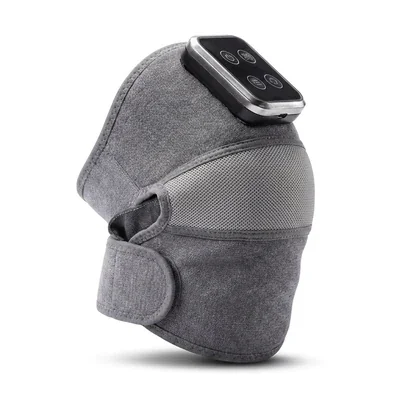
  • Knee version of the Stepeva wrap, mesh over the kneecap and one broad fastening strap

    Stepeva knee massager

    Same construction, shaped as a knee support. A mesh window sits over the kneecap and a single broad Velcro strap does up in one motion, whether seated or lying flat.

    • Extra setting: red light warmth
    • Four buttons, modes mixed or single
    • Fills over USB-C, no loose cells

    £139.80£69.90

    Buy now
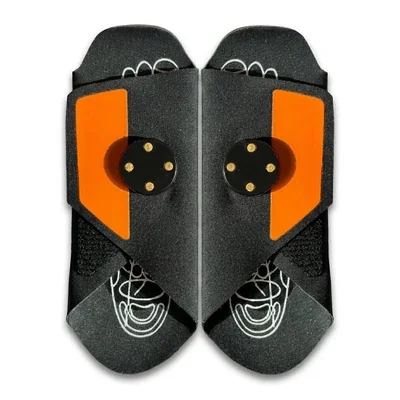
  • Overhead view of the Stepeva slipper pair, dark soles with orange contact pads

    Stepeva EMS slippers

    Soft slippers, fabric underneath, with a conductive pad sitting under the forefoot. On they go, exactly as slippers should, and after that it is a matter of staying in the chair.

    • One handset drives both slippers
    • Battery inside, USB-C to refill it
    • The same three settings, plus warmth

    £169.80£84.90

    Buy now
Under the neoprene

Three actions a foot rub cannot manage

All of it happens inside a single piece of neoprene, is driven by a pair of buttons, and asks nothing of its owner beyond staying seated.

  • The three actions, running together

    Pulses, warmth and pressure reach one foot in a single minute. Each will also run alone: warmth by itself through a February evening, pulses by themselves after a long shift. Which of them runs is settled on the small black controller sitting above the instep. A session lasts fifteen to thirty minutes, seated or stretched out.

    All three, or one
  • Pulse settings 1 to 3

    Setting 1 is barely noticeable. Setting 3 is firm and unmistakable. The advice runs the same for everybody: open at 1, give it a couple of minutes, and climb a step once the rhythm has begun to feel agreeable. Even at the top the pulse stays even, and there is no jolt to it.

    One step at a time
  • Two sets of controls

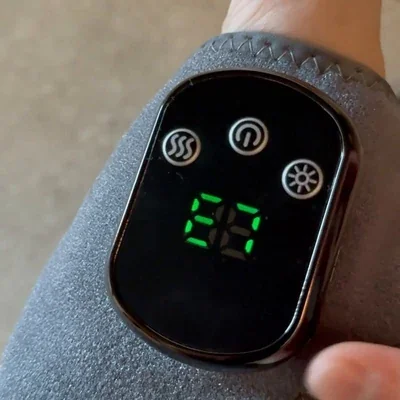
    A small screen on the module reports whichever setting is running, and a fingertip is enough to change it. The handset carries those same controls over to wherever the owner is sitting, which matters more than it sounds: altering the intensity or dropping the warmth no longer means interrupting a session to reach the floor.

    Module or handset
  • Charging: one ordinary lead

    Any ordinary USB-C lead does the job, including the one already sitting on the bedside table. Nothing takes button cells, and there is no special adapter worth keeping hold of. A charged unit runs with no lead attached, so nothing trails across the carpet while a session is on.

    Nothing to replace
  • Neoprene that adjusts

    The material is soft enough to mould itself around whatever foot goes into it, and two notched straps do the fitting. Most adult sizes are covered, with no gaping at the front and no pinching across the top. Cleaning means wiping it over with a damp flannel: no part comes off, and none of it belongs near a washing machine.

    Just a flannel

What the Triple Therapy actually is

The name covers something quite ordinary: three physical effects, delivered to one stationary foot, all at once.

Begin with EMS. The letters mean electrical muscle stimulation, nothing more exotic than that. Conductive panels on the underside, the part in contact with the sole, give off gentle electrical pulses. What follows is a contraction that travels through the arch in a steady rhythm, arriving without any effort from the person wearing it. The foot stays where it is. The muscle tightens and releases in small, even waves, at a steady tempo.

Warmth is the second of them. A warming element sewn into the neoprene lifts the temperature across the instep and around either side, by however much the chosen setting allows, which is the difference between a pleasant twenty minutes and a cold one. The third owes nothing to electronics: fastened neoprene presses evenly from every side, holding everything still and keeping the conductive panels flush with the arch until the session ends. Run all three for the full effect, or pick one and leave the others off. Warmth by itself, last thing at night, is the combination owners mention most.

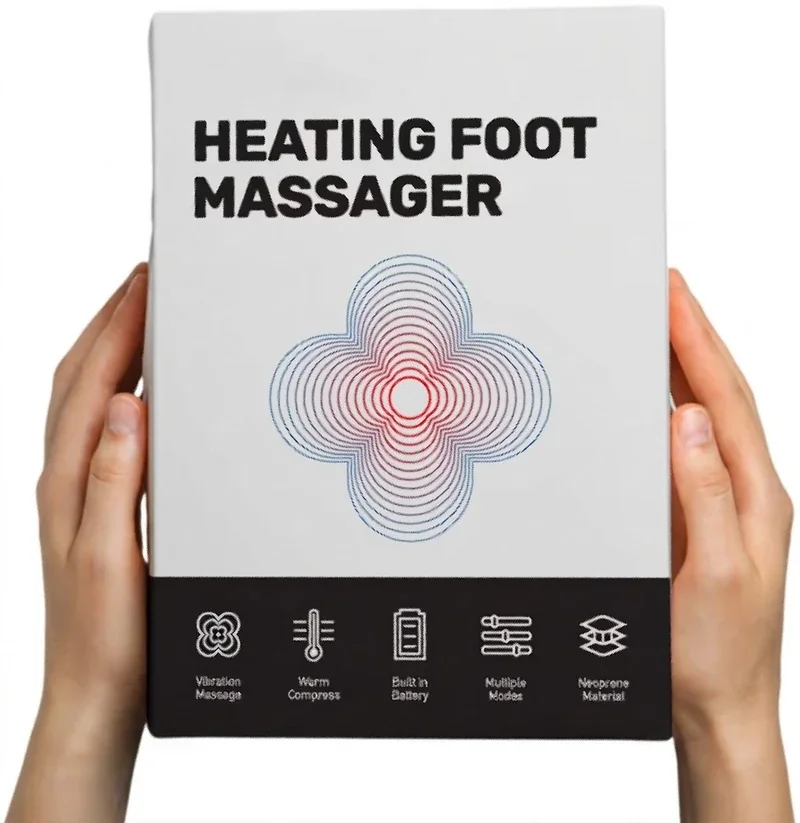
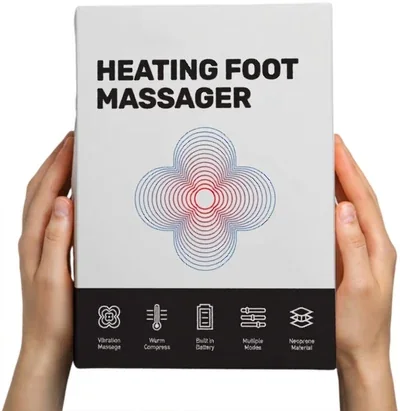
The Stepeva carton held up in both hands against a plain background
Nothing needs assembling on arrival: the modules come fitted to both wraps inside the carton.
3

Pulse settingsFaint, moderate, firm. Climb to the next one once the setting below has stopped registering as much, and one press of the button takes it down again.

15 to 30 mins

Time per sessionLong enough to be worth doing, short enough that it actually gets done. Stretching it out adds nothing at all. Fifteen minutes daily is the better habit.

Two numbers, and that is the extent of the specification. Everything else is judged by feel, from either set of controls.

“The wrap works the muscle and adds a little heat. There is nothing more to it than that, and nothing more is needed. Our one piece of advice: begin at the bottom setting and build the habit upwards over a fortnight.”

The Stepeva design team

How it feels while it runs

Almost nobody expects the opening seconds. It starts as a light prickling beneath the arch, closer to a rapid series of taps than to anything electrical. Within a minute the tempo evens out and the prickling turns into a slow, regular pulse, rising and falling underfoot. The warmth behaves differently again: it arrives gradually, levels off inside a couple of minutes, and stays there.

Control never leaves the person wearing it. Too strong is one button press away from being fixed, and switching off happens on the spot. It is all spent in an armchair, or flat along the sofa, feet at rest, with nothing to grip, nothing to watch over. At the end: straps loosened, wrap wiped over, back in the drawer until tomorrow.

In practice

Setting up a Stepeva session

Fastening and setting take about a minute between them. After that the wrap is left alone for the next half-hour. Three short videos below.

1

Fasten it

Open the wrap flat and rest the foot in the centre, bare or wearing a light sock, so the conductive panel sits directly beneath the arch. Close the neoprene across it and take up each strap until movement stops. Slack is no good. Neither is anything that presses hard across the top.

2

Pick the settings

The module lights up on whichever setting it last ran. Level 1 first, warmth added if it appeals, and a step up when the pulse has begun to feel unremarkable. Whatever the module does, the handset does too, so it is worth keeping within arm’s reach.

3

Then leave it alone

Feet flat, back against the chair, and the next half-hour belongs to the device. It keeps its own rhythm through to the end. Getting up and wandering off is the one thing to avoid: this runs at rest, from beginning to end.

A short session, most days

Thirty minutes is the ceiling rather than the target. A quarter of an hour usually does it, daily or two or three times in a week. Six points in an ordinary week where it fits without anything being rearranged.

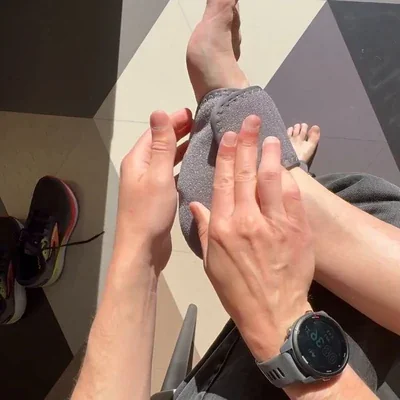
  • A hand smoothing the fastened wrap over the instep, wristwatch just in shot

    First thing, before the socks go on

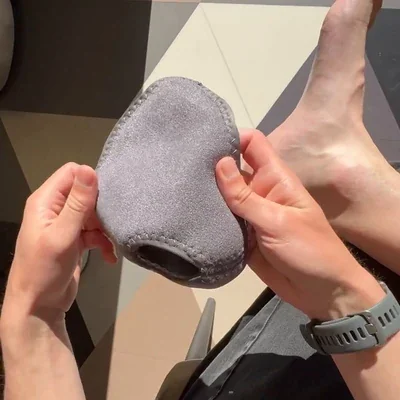
  • Open grey wrap held in two hands, a bare foot and trainers on a patterned floor

    Straight after a run, kettle on

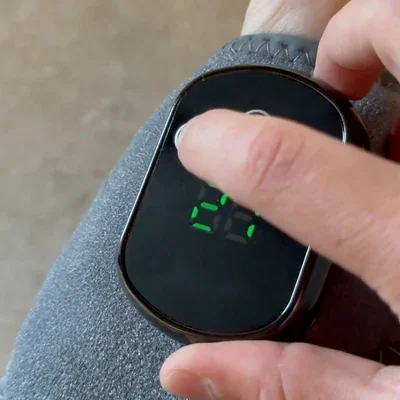
  • Fingertip resting on the middle of the controller display

    A fingertip is all the screen needs

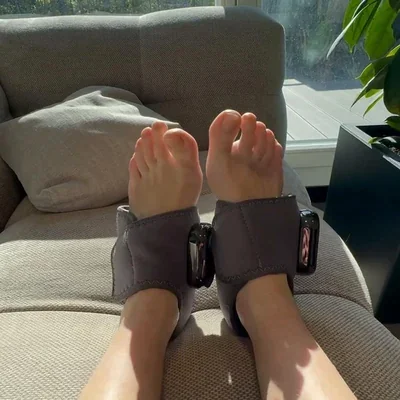
  • Two wrapped feet side by side on a beige sofa, plant and glass doors behind

    Sofa, television, feet finally up

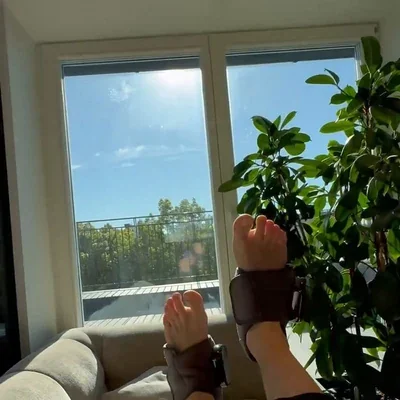
  • Wrapped feet lifted towards sunlit glass doors, a shrub in a pot outside

    Raised on a cushion for twenty minutes

  • The controller lit up, three symbols and the running level on its display

    Changing mode halfway through

Everything included

The carton holds three items and needs nothing adding to it. No cells to purchase, no extra part to order separately.

  • Line icon standing for the pair of foot wrapsTwo EMS foot wrapsLeft and right, straps ready to adjust, modules fitted from the outset.
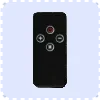
  • Line icon standing for the wireless handsetOne wireless handsetChanges setting, mode and warmth from wherever the owner happens to be sitting.
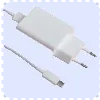
  • Line icon standing for the USB-C charging leadOne USB-C leadWorks with any ordinary USB plug, including the one by the bed.

Three habits worth picking up

No skill is involved anywhere in this. Even so, owners who do these three things tend to report an easier first fortnight.

Resist setting 3. The settings are not a ladder to be climbed on the first evening. Run the opening one right at the bottom, wait a good two minutes, and climb a step only while the tightening still reads as mild. For the first week it pays to sit deliberately below the limit of what is bearable. Most people arrive at their own setting by about the fourth session, and nothing whatsoever is gained by getting there sooner.

The contact matters. Pulses reach the muscle through skin, so a dry, freshly washed foot does much better than one straight out of a sock at the end of a long day. Take up the straps so the neoprene lies flush along the instep with no air trapped behind it, stopping short of anything that squeezes. You can tell when the fit is right: the sensation spreads evenly under the whole foot, rather than gathering in one hot spot, or dropping out whenever the foot moves.

Give it a fixed slot. A session pinned to the same point in the evening survives; one that waits for a spare moment does not. Early evening suits most households, once the day’s standing or sitting has been done. Settle somewhere steady, with the feet flat or raised on a cushion, and leave the clock to run while the legs do nothing whatsoever.

Worth knowing: connect the lead the moment a session finishes, before the wrap goes back in the drawer. It removes the one thing that stops people using it, which is a flat battery discovered on exactly the evening they fancied a session.

Four things to weigh up first

Some plain speaking is in order. This is a comfort device for the home and it will not suit everybody. Four points, better raised now than in a complaint later.

  • No medical claim is being made. The wrap exists to make an ordinary evening more comfortable. It sits alongside professional advice and any treatment already under way, never in place of either.
  • The sensation takes getting used to. That rhythmic prickling beneath the arch resembles very little else. Most people need a session or three before a preferred setting emerges.
  • Seated or lying back, always. Never upright, never mid-walk, and certainly not at the wheel. That rule is binding rather than advisory.
  • Two people rarely agree on a setting. Skin sensitivity, the build of the arch and plain familiarity all play a part, which is why one household often ends up with two quite different habits.

Precautions and looking after it

Use is external, and the skin underneath should be healthy, unbroken and dry. Never while asleep. Damp surroundings are out, which rules out bathrooms, the edge of the bath, and feet straight from one. Storage should be somewhere children and animals cannot reach, charging lead included. Anyone on medication, or living with a diagnosed condition, should put the question to their GP or pharmacist ahead of a first session. Worth repeating one last time: never upright, never on the move.

Upkeep is minimal. Give the neoprene a going-over with a barely damp flannel, never submerge either part, then leave it flat and open until dry, and give it a top-up over USB-C. Folded flat in the drawer, the pair takes seconds to bring out again.

Owner reviews

What owners report

863 buyers left a review after their order, averaging 4.8 stars. Five recent ones below, chosen because they say something specific.

  • Hannah P.Manchester · 12 June 2026
    Bought it on the back of a fortnight of twelve-hour shifts. The first go was stranger than I had bargained for, more of a twitch than a massage, and I very nearly gave up on the whole idea. A week at the bottom setting sorted that out. Four stars rather than five only because the straps could stand to be a shade longer.
    Verified buyer
  • Gareth L.Cardiff · 2 March 2026
    What makes the difference is not having to bend double just to reach the buttons. I get it going, drop the handset beside me and adjust from there. A small detail on paper. It is also the entire reason the thing gets used instead of living in a cupboard.
    Verified buyer
  • Priya S.Leeds · 27 February 2026
    Our flat is freezing from October onwards and my feet were always the worst of it. The warmth builds slowly, which I much prefer, and it stops a good way short of uncomfortable. Come April I turn that side of it off entirely and run the pulses on their own.
    Verified buyer
  • Douglas M.Glasgow · 18 April 2026
    A UK 11 here, and I had assumed the front would sit open on me. It does not. There are notches to spare on both straps. My daughter takes a UK 6 and borrows it after netball, so we shift the straps along and carry on as normal.
    Verified buyer
  • Ruth A.Bristol · 21 May 2026
    The knee one came second, after a winter of using the foot version. That broad strap holds it steady with my leg stretched along the footstool, which I had genuinely doubted it would. It takes the same lead as everything else in this house, so charging never turns into a chore.
    Verified buyer
Bundles

Pick a bundle

The unit price falls as the quantity rises. Sensible where a second person at home wants one, or if a spare set appeals.

  • 1 massager

    One Stepeva wrap standing against its packagingx1
    50% off

    Instead of £89.80

    £44.90

    each

    Total: £44.90

    Buy now
  • Popular choice

    2 massagers

    Hands presenting a Stepeva carton, white studio backgroundx2
    60% off

    Instead of £179.60

    £35.90

    each

    Total: £71.80

    Buy now
  • 3 massagers

    Stepeva wrap and carton, seen straight onx3
    64% off

    Instead of £269.40

    £31.90

    each

    Total: £95.70

    Buy now
  • Best price

    4 massagers

    Wrap, controller and carton grouped togetherx4
    67% off

    Instead of £359.20

    £29.90

    each

    Total: £119.60

    Buy now
Card and payment logos accepted at the checkout

Payment is taken securely, orders leave us within one working day, and thirty days are allowed for second thoughts. Return the wrap and the money comes back.

Common questions

The questions we get asked

Six things people tend to want settled before placing an order.

How often is a session worth doing?

Anywhere between every day and twice a week. A session lasts twenty minutes or so, half an hour at the outside, which makes a daily habit realistic where one sticks. Mornings suit a foot still stiff from the day before; evenings suit one that has been standing since breakfast.

Nothing requires daily use. Many owners keep the wrap for the heavier days and leave it in the drawer the rest of the week.

Is it suitable if I already have a diagnosis?

This is a comfort device for the home, not medical equipment. Anyone living with a diagnosed condition should raise it with their GP or pharmacist first, since only a clinician can judge whether pulses and warmth are appropriate in that particular case.

Use is external, on unbroken skin, dry and free of lotion. Full precautions are set out above, under Precautions and looking after it.

Does shoe size matter?

Sizes do not come into it. The wrap closes on notched straps, so a narrow foot simply takes up more strap than a wide one, and most adult sizes are covered either way.

Sharing is straightforward for the same reason: each person has a notch of their own and moves the strap across in a moment.

Can it be worn standing or on the move?

No, and this is not a soft recommendation. Seated or lying back, always.

The reason is practical: electrical pulses make the muscle beneath the arch contract in rhythm, and a foot carrying body weight resists that movement rather than following it. Standing up also brings a genuine chance of going over.

How soon is anything noticeable?

Within the first few minutes of the first session. The prickling and the heat both register straight away, so nothing has to be waited out.

What differs from one person to the next is which setting they end up on, and two members of one household rarely land in the same place. No outcome is promised: begin at 1 and climb no further than comfort allows.

What arrives in the carton?

Two neoprene wraps with their modules fitted, a wireless handset and a USB-C lead. The list ends there, and nothing further needs buying.

Charging happens over the supplied lead: no button cells, and nothing disposable to replace anywhere in the product.

The grey wrap with its controller, alongside the box it arrives in

Three actions, one piece of neoprene: pulses on settings 1 to 3, warmth at whatever level suits, and the steady pressure of the straps. Run all three at once, or just the one. The battery fills from a USB-C lead, a session takes twenty minutes or so with the feet up, and thirty days are allowed for sending it back if it turns out not to suit.

Buy Stepeva